No no, write slow!

Twitter is abuzz with talk of NaNoWriMo, the (now) international novel writing marathon held yearly for the month of November.  Any writer worth her ink gives it at least a thought, come October.  There is nothing like a deadline for a writer, and there’s nothing like competitive writing.  It’s a way to talk and feel and obsess about your craft and process for 30 whole days – with thousands and thousands of writers all over the world.  And let’s face it – what other kind of marathon am I ever going to run?

In October, I did find my hand poised over the register button at the NaNoWriMo site.  But, reader, I did not press.  I took a deep breath and scurried back to my paperwork.  Because I knew it wouldn’t work for me.  It has, however, worked for other writers.  Not thousands or even hundreds.  The site cites a handful of writers who moved from NaNoWriMo to publishing success, including Sara Gruen’s charming Water for Elephants and the three-book-deal secured by Julia Crouch.

I’m not raining on anybody’s parade here, and I’m not the only one to cast this little shadow of non-participation.  After all, I’m not the only unpublished writer in the world not taking part.  When I started writing my first novel, after many many years of only writing plays, the idea of 50K words terrified me.  Who could possibly say that much?  And could I?  The first draft took me a solid year of writing, mostly grappling with the mechanics of moving characters in and out of scenes.  In drama, the lights go up and people start talking, often in the middle of an argument or at the moment of a decision.  In fiction, that kind of thing is frowned upon.  Contemporary fiction asks a writer to “enter late and leave early” in a scene, meaning that not too much white space is filled with black words about wallpaper, but in drama there isn’t even any wallpaper unless someone is talking about it.  My first novel rather relies on dialogue to tell its story, which isn’t surprising.  But it took me a long time to get characters to look around – look up, look down, turn around, breathe in, touch things, smell.  My training in drama meant that they were always looking for a fight, always standing their corner, always reasoning things out.  Most of my plays stood slim at 70 – 85 pages.  That’s too short to even be a novella.

The sheer act of committing 50,000 words to paper or screen is nothing to be sniffed at.  But I suppose I know I can do that now.  I do have enough words in me.  Each draft of my first novel was an entirely different book, changing point of view, changing plot, changing characters.  I know I can sit down and churn the words out.  But now, poised to begin writing my second novel, I know I don’t want to rush it.  The first draft is fun.  It’s exciting.  It’s like an epic, secret romance where anything is possible.  Until it is formed, the first draft can be anything, and it’s thrilling.  So, I don’t want to rush it.  I want to have long suppers and sweet dreams and hours spent staring into the distance over my first draft.  I don’t want to chivvy it along to love me in only 30 days.  Because I don’t want it to be fickle.  I want it to stay.  That doesn’t mean, however, that I hope my second novel will take as long as my first.  At least I don’t have to learn to write fiction all over again.

In the spirit of NaNoWriMo, I will use November to plan my second novel beyond the broad strokes I’ve made while researching.  I did not plan my first novel only because I didn’t know how and I didn’t know why.  But I hope, in planning, that subsequent drafts won’t be as wild or as laboured, that perhaps I can just tell the story I want to tell better and more simply if I actually do know the story I want to tell in advance.  I won’t know everything, of course.  That’s what those long dinners with the story are for, to let it surprise me, to get it to let down its hair.  But I will know more than I knew last time.  And that’s progress enough for me.

So, here’s a toast to all writers, now 2 days into a 30 day journey!  I wish them all luck, success, and good fortune.  As for me, I will be planning and making lots of drawings and lists and calendars.  I won’t be writing much of anything at all.  I plan to start writing my first draft on 29 November – or maybe the 30th – certainly by 1 December.  And if I can finish a draft by April, I will consider that a real achievement.  But I suspect that will even be too fast for me.  Who knows?  I guess it all depends on how the planning goes, what the continuing research kicks up, and how all the things that I don’t yet know will affect me and the story.  Still, there’s nothing like a deadline.

The Day Job

This is me today, dealing with my day job.  This is also some super graffiti found in Berlin, because I only posted a tiny percentage of the pictures I took.  If Berlin was a writer’s holiday, returning home is the payback.  My day job means I help other writers to develop their work and, hopefully, attain their dreams.  It is a great job and I’m lucky to have it in this age of slash-and-burn cuts.  But it is hard to get all the work done without feeling a little blue, especially if you want to be writing.  It’s hard to get the balance right.

My day job is running East Kent Live Lit, a network for writers and artists in the East Kent districts of Canterbury, Ashford, Shepway and Thanet.  We’re in the middle of the Canterbury Festival, then straight on to the Folkestone Book Festival.  East Kent Live Lit has a number of events running in both.  Today was spent trying to document all this work, so that it will live beyond festivals, beyond my job, even.  If you want to see what my day job has been up to, visit the East Kent Live Lit blog.

Coming soon, on that blog, is a podcast of Friday’s publishing conversation, and photos of a brand new poetry installation on Westgate Tower – and some footage of our upcoming Slam at Orange Street Music Club if you’re really lucky.  On this blog?  Maybe when the day job lets me.

On not writing

I have not written a post in ages.  Ages!  What can I say? It is due to the finishing of many things.

I say finishing.  It is, of course, only a furlough.  The furlough, being, a bit of a holiday from obligation.  A week of sloth and sun, reading the juicy books that feel too long for home: Byatt’s The Children’s Book, Faber’s The Crimson Petal and the White, Mantel’s Wolf Hall, now at the beginning of Kingsolver’s The Lacuna.  Rich, epic journeys all, and my holiday was/is much the richer for them.  But Monday will find me back at my desk, back at the research and the writing.

The editing and rewriting of the first novel that I hope are done are not, of course, really done and the “work” I had and finished will begin again, then increase in earnest when the schools reopen.  There are autumn events to plan, a schedule to make for the rest of this year, the beginning of next.

There is a hope that I can go back to where I left the second novel, when the rewriting took over, and find something there…but I probably will simply begin again.  I probably will have to. I imagine I will read what I have left and think – no, that’s not it at all.  The first scratchings away at character and voice are so tentative – like parting clouds, like shaping mist.  What will I find when I read what I left?

But that’s for Monday.  Today it is raining in Liverpool. There is a book to be read, there are catch-ups of Masterchef to be watched.  It is still a holiday, even as “real life” reminds you it is waiting for you…

Little darlings

I think it’s a strange phrase, that, that you should kill your darlings in your writing.  Maybe I don’t know darling when I see it – I wouldn’t know what to slaughter first.  When I’m editing, I’m just trying to hone the story, trying to chip away at the other roads I might have taken, roads whose destination signs have been left as small hooked snags, unresolved meanderings, or descriptions that have no purpose whatsoever.  And then there is, simply, the pursuit of elegance…

But there is not enough time for this editing.  I am working with other people’s darlings, namely their children.  As is the way, nearing the end of term there are not enough days to fill with all of the workshops that want doing.  I finished a large poetry and science project yesterday, that featured some splendid site-specific installations and POV writing for insects, and am off today to continue the crafting of an alien invasion in Sittingbourne.  Future workshops over the next two weeks will feature a film with 200 Year 9s on the 3 Ages of Ramsgate, with some lovely poems about journeys to the famous bathing town from the points of view of Georgians, Victorians, and modern-day students, as well as days spent creating new games with business studies students and how to produce a festival with grammar school girls.  On the last day of term, the aliens will arrive and be sent, all things being well, back into space and I will contemplate a lie down and a stack of books, secure that we may live to eat a few more days.

So, that is not an excuse for shoddy workmanship.  The first book has been redrafted and I am playing hide and seek with typos and wrong words that don’t “tool” as typos, and have been sending first pages out.  Terrifically exciting.  Meanwhile, this book – the book for this blog – languishes.  It’s time will come, but not soon enough for me.

Which came first?

There is a whole lot of information on how to write a synopsis.  Go on, google it.  I dare you.

See what I mean?  YouTube videos, DVDs for sale, virtual racks of books, tweets galore from the #amwriting strand.  What is the point of synopses, really?  I’ve been to a bunch of panels with agents.  I’ll bet you have, too.  Agents have different takes on them.

At the first panel I attended, an agent said a synopsis was to check that the writer had finished the book.  Clever!  At a later panel, an agent said that it was to see if there was an ending, and what the ending was.  Note to those whose synopses end in ellipses!  But many a writer is told off for having, indeed, submitted their finished book – hurrah – with a synopsis that does not match it, a synopsis that tales a different tale.  Which comes first – the book you write or the book you want to write… or the book you meant to write?

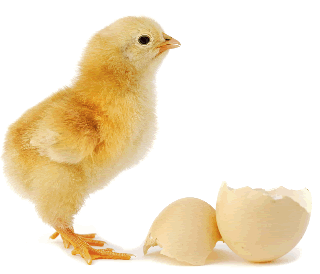
Well, the book is the egg, of course, but sometimes there’s a chicken of a synopsis impelling you to write it.  I had a reading of my first draft from The Literary Consultancy.  To learn more about what they do for you, why not visit my professional development blog for East Kent Live Lit, where they spoke at a recent networking event.)  OK, advert over.  The reading I received, from the generous Sara Maitland, told me that my draft did not match my synopsis and that without said synopsis she wouldn’t have actually known what happened at the end.  Seems I sank under the weight of my own imagery there in the final chapters… Come on, it happens to the best of us!

Now that I’m a few drafts older, it’s time to square up to the old synopsis and slap it around a bit.  But maybe, actually, I should buy my synopsis a drink.  That was Meg Davis’ advice, anyway, from MBA.  (Another from that link above)  She said a synopsis should feel like the writer is at the pub just telling the story.  That’s all it is.  Just tell the story.  What happens, then what happens next.  Easy, right?  You’ve written the book.  You know what your story is… don’t you?

Sometimes the story changes in the writing of it.  Make sure your synopsis keeps up with it.  Then, just tell the story.

Well, that’s the plan, anyway!

On rejection…

No one ever said this would be easy.  I’m editing the first novel, in the process of finding a home for it, and wishing I were writing the second novel.  Which is greedy.  The cat cries for tuna when he has a bowl full of dried food and I tell him – what’s the problem?  You’ve got food.  But, it isn’t the food he wants.

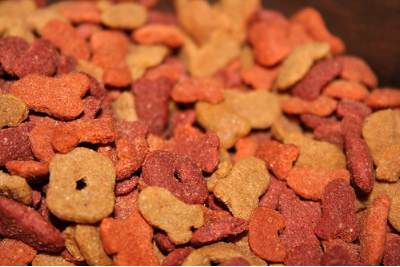
Editing is like dried cat food.  It just sits there until you finish it.  Going stale.  New projects are tuna, full of juice, when anything is possible.  With dried food… not so much.  And the longer you leave the new project, the fear you’ll lose the juice that you know is there, if only you had more heads.

I got my first “no” on my first novel today.  Ouch.  Still, I’m grateful for the agent’s time in reading it, and grateful to be told “no” rather than being ignored. Bubble Cow told us today that “every rejection is a step closer to publication.” Today, I’m not feeling it.  Still, my butt’s in the chair and I’m – well, I’m blogging, you can see that – but I’m squaring up to that dry bowl of pages to be edited, to prune and polish until they shine.  Until they cannot be refused.

No one ever said it would be easy.  Some books and sites say there is a magic formula.  We’re smarter than that.  We know there is not.  There is only this screen, this chair, this cup of tea, these words…

Fear of wallpaper…

Editing my first novel after receiving some much-needed feedback, I was happily scribbling with red ink until I came to page 73 and my character entered a kitchen for a first time.  What is it with kitchens?  I ground to a halt. Suddenly, my vague descriptions of enamelware stove and tin sink seemed scanty. It seemed more judgmental than descriptive; it got in my way and I just couldn’t picture it.  I can see my own mother’s avocado green kitchen from the early 70s with no problem, even though it’s cream now; it’s a real place in history I can describe that would tell you something about my mother or about me. But what was I trying to say about this kitchen in this book, 21st century Oklahoma in an old house still on propane?  Because when an appliance is bought, is says something about how and what the characters are doing, and that means charting their financial history as much as anything.

The family in the Panhandle has been in this house since before the Dust Bowl. So, the appliances could be as old as the mid-Twenties, say, bought on credit when banks finally started financing farming in “no man’s land”. But an old stove would have been expensive to maintain, if I still wanted it in the kitchen and working, and what the family doesn’t have is money. So, when did they have enough money to re-do their kitchen? And why? Back to flow charts of wheat prices.  Good rain in the Panhandle meant wheat prices went up in the 40s, but drought in the 50s saw them plummet. So, there’s a stove-buying window there, but it feels too early – the stove from the 20s would have been fine. But it can’t be too recently, certainly not after the matriarch died, because the male characters wouldn’t have changed any appliance, even after it stopped working. So, another decision to make, and a stove is now making me decide how young my male character is when he lost his mother.

Does any of this really matter when you’re writing?  Is it just some excuse to stop editing and start googling?  Well, yes and no.  When I first started writing fiction I had this fear of wallpaper. Did I really have to send a character into the room and describe the wallpaper?  As a playwright, you described wallpaper – or any less than crucial scenic element – at your peril. (And for goodness sake, don’t put anybody in a bed or a car! In my book, characters are lucky to get out of their beds or their cars, or their kitchens…) But make characters keep wandering into empty black boxes of locations and the reading experience is less than rich. So, what’s the important detail when you’re writing fiction? How do you know when to take a closer look – and when you’re just stalling for time?

Ironically, my first book is stuffed full of wallpaper, as well as linens and tapestries and cloths of different textures. Because textiles are important to my main character, a practical woman who comes from a handmade community, but is very sensual. She “feels” things. There is a difference between cheesecloth and kettle cloth and she would notice it. Likewise, domestic details are ones she would notice: surfaces, trimmings, how things are put together and treated. And she notices appliances because she needs to use them – she needs to get the best out of everything that she can while she can. So, she would notice the state and the age of the stove, not commenting on whether it’s clean or chipped particularly, but whether it’s being used – whether it can be used – whether she can use it. Because her need makes her sharp and desperate.

On page 73 I have her in 3 kitchens in her head: the Oklahoma kitchen she is seeing for the first time, her mother’s old kitchen which she hasn’t seen for 20-some-odd years, and the kitchen she has just fled from. So, again, the details matter. How are these kitchens alike? In what ways do they differ? Which feels most like “home” and why? And does it matter?

Yes, because it is how you can reveal memory. It is how you can give insight into a character who might seem difficult to like. It’s how you can punctuate all the places that have made her her. And it all goes back to a stove. Similarly, making decisions such as these can lead to new scenes, to help you dig deeper. Because if the family has been there since the 20s and replaced their stove in, say, the late 60s, then the old stove is sitting somewhere on the land, and I haven’t written it in. It should be there, discarded, and perhaps another character interacts with it in a way that is meaningful – or maybe it’s just a potent details that says something about a family that never gets rid of anything, in case it’s needed again. And it’s those details that make the whole thing feel somehow more authentic – for the reader, hopefully – but mostly for me – to test the limits of this world I am making, one image, one decision at a time.  If the stove is right, it serves the story. And hopefully the stove, the wallpaper won’t mind too much when a character gets right close up and has a good old look at them.

when the story is too big

I’m having trouble knuckling down today with this book.  The chest infection and day jobs have kept me away and distracted.  Now I’m having trouble rekindling that first flame.  Worse, at only 11K in, I’m looking at what I have and thinking – no, that’s not it at all.

What to do when the story is so big and you feel certain you are too small to tell it?

Think small.  Work on the details.  Create tiny little moments that will somehow stitch together into the big picture you can see in your mind but your fingers won’t interpret.  When the story is too big, make it small enough to deal with.  If the choice is between narrowing your field and focus, or sitting slumped in the chair overwhelmed, the choice is easy.  Little thoughts, little words, little steps.  That is how a novel gets written.

like a ghost

I am shaking off the red dirt of Oklahoma.  I am shrugging out of the clutches of religious extremism and the heavy gaze of God.  I am trying to get a book out of my system.  Perhaps I do not believe that it can leave me entirely, while it is still in the process of being “sold”.  But I must get out from under it, if I am to move on.  I must stop following polygamy trials quite so closely.  I must stop reading the Oklahoma farm reports daily.  But I cannot give up, entirely, on either of them.  These polygamists and farmers matter to me now.  It matters how these men of “privilege” will be sentenced, and it matters how the canola is doing this year, when wheat is down.

The map of Oklahoma has come down and pinned in its place is one of Port Erin, a village at the southern end of the Isle of Man.  The images of the long lines of women in their prairie-period-costumes is replaced with the photos of internment, May 1940, when all B class and some C class “enemy aliens” were arrested, held in cells and public places, then shipped to the Isle of Man.  They took whatever they could carry.  And you cannot help but think of the journeys they had already made to come to Britain, for roughly 85% of these women were Jewish.  Refugees.  Some had come on the Kindertransport.  And it makes me think of polygamous pioneers, trudging across plain land, not knowing what the west was, or how it would change them.  There are always strange links between ideas, as each attempt at a new piece is still a scratch at an old, deep place we are trying to reach or to excavate.

It took me a long time to get the internees out of my system when I first researched their stories, but I did.  I went on to write about oyster girls, aviatrixes, young offenders, evil carnivals, and, finally, polygamists and farmers.  All of them are still with me.  Never truly written out of my system.  A story can haunt you like that.  Like a ghost.

new book, new blog

I cut my blogging teeth on Blogger, but something made me want to have more control over how it looked and read.  I’ve had a go at different themes and I’m happy to run with this one, for now, to create a thinking and planning place as I start my second novel.  The picture above is one I took in Port Erin on the Isle of Man when I created a site-specific, promenade performance with a carload of old coats borrowed from the Royal Court, stacks of old suitcases, a steam train opening scene and a lovely, large cast of locals.  It was an amazing year in residence with the Isle of Man Arts Council.  It changed my life in a number of ways, but probably not as dramatically as the island changed the lives of 4000 female internees during WWII, when the tip of the island was surrounded by barbed wire to become Rushen Camp, or the villagers who found themselves interned as well.  It’s the story I can’t let go.  Or rather, it won’t let me go.  It insists I do better, dig deeper, look harder.  It is the call I must answer – or try to.