A Writing Workshop

Hello! As a few writers had trouble with today’s Zoom link for The Stay-at-Home Literary Fringe Festival, I’m putting my workshop here on line – in word form. Grab a pen and get writing!

We began by grounding ourselves in place and time, settling into our senses, before freewriting from the simple words: I want. For 3 minutes, we just wrote to the prompt – I want – however we wanted to. The task in freewriting is to keep your hand moving – any time you get stuck, just write – I want. After that, we talked about how we were going to think about wants – and desires – and objectives for the rest of the hour.

We got going with a game of word cricket, a game Vanessa Gebbie plays: I must have played word cricket in one of her workshops about 10 years ago now. Golly! To play word cricket, you need to “catch” words as they’re “thrown” to you – in my game, I held up cards from The Literary Witch’s Oracle, one at a time, introducing 10 cards and 10 words in 10 minutes.

We began with the image of a house. I asked writers to picture a person inside the house – maybe upstairs – and to choose a simple objective. Did the person want to get out of the house – or to stay in? And then the cards came, 1 after the other, until the writers had to accommodate 10 words in their story – 10 words they might not have chosen for themselves.

I drew the cards at random from the pile – and this is what they got: knife, teacup, moon, wings, wolf, doll, lantern, bees, milk, spider. I asked the writers to consider letting the words pull their story forward – driving the character – or using them as obstacles to stop the character from achieving their simple objective. After 10 minutes, the writers had a story. A simple story – but a beginning, nonetheless.

From there, we talked about how objectives build characters. We might not know a lot about those characters, in 10 minutes, but we will know how they respond – to objects and obstacles. We know what she wants – and we see her trying to get it. But how do we raise the stakes of a simple story? We explore what the character is willing to do to achieve her want – her objective – by learning what is at stake.  Who will the character be if they get what they want?  What will happen if they don’t get what they want?  

To learn what’s at stake, we have to consider what will happen if she leaves the house. We might need some backstory to show why she wants to leave – or stay? We might need information about her relationship with the house. Something has happened that made her want what she wants – to stay or go. Characters begin in stories fully-formed, of course. Even in the opening lines of a story, we see characters coping – or not coping – with the world they’re in. Before anything changes – we see who they are (and have become) with what has already happened to them. I asked the writers to consider – what happened in the house before the story you just wrote?  Is she in the house – alone?  Is there someone else usually there? Has someone just left – or is someone about to come?  How does what has already happened influence what they want? We talked about how we would learn about what had happened – before – through how the character perceived her environment as well as the obstacles and objects that arose.

How else do we raise the stakes? We give information on what staying in the house or leaving it means to her. What is the deeper desire – why does she want what she does? If she stays in the house, what will happen?  What does she want to happen for her, in the house?  Who does she imagine she will be?  If she gets out of the house, what will happen?  What does she want to happen for her, outside the house?  Who does she imagine she will be?  This gets at her yearning, her dream.  After all, in a simple story like Cinderella, we know she wants to go to the ball – but what she really wants is to fall in love – and get out of the bad house she’s in.   

Take some time to sketch out this cause and effect, these stakes.  Did the character get out of the house? Did she achieve her desire? Or did the obstacles you placed in front of her – through these words – make it harder for her to get what she wanted?  If she gets what she wants, it’s a happy ending.  If she doesn’t, it’s a tragedy – or she changed her mind. But a story is made more complex – and more compelling – through things being as difficult for characters as possible. How far could you push this simple story to make it matter for your character – and you?  

Stories are lit and fuelled by desire. Characters are driven through the story by what they want – rather than responding to story circumstances. Characters act – even when they are reacting. The reactions – to story elements like the things on the cards – still have to push and pull the characters closer to or further away from their desires, their objectives.  

So what are our objectives? At the start, you wrote – I want – I want. How do obstacles (like things on cards) push and pull what we want? How can we stay active in our own lives, our own stories? What is the yearning that is pulling us forward in the stories of our own lives?  In these strange days we’re living through, how can they not become just another story about a virus – but about a person who was changed by virus – whether through meeting it or avoiding it or trying to keep it out of the house – and survived.  And thrived.  And changed.  

That’s a story we all want to read, isn’t it? However these days are treating you, find ways to keep writing. And why not join me online next week?   


The Stay-at-Home Literary Fringe Festival

It’s time for a festival! I’m delighted to be a part of this brand new fringe festival, produced by MA students at the University of Glasgow as a response to the Stay-at-Home Literary Festival. Organised by author Carolyn Jess-Cooke, it was the first of what will surely be a full summer of lockdown lit events, open and accessible to all. The Stay-at-Home Literary Fringe Festival features masterclasses, writing workshops, talks and open mic events. I’m particularly delighted to see events with friends from Canterbury Christ Church, alumna of our Creative Writing MA, Charlotte Hartley-Jones, and a lockdown psychogeographical workshop with author and colleague, Sonia Overall. It’s a full programme – jump in and get involved!

For the past year, I’ve been running a free writing group at Canterbury Christ Church, The Writing Circle. Throughout the festival, The Writing Circle will pop up from its usual home on campus to become an online writing space with prompts, free writing exercises, and ideas to get you writing your heart out. If you want to join in – follow this link to RSVP.

The festival takes place 27 April – 16 May 2020: The Writing Circle happens on Wednesdays 29 April, 6 May & 13 May, 2 – 3 PM. See you in the Circle!

#bookgame

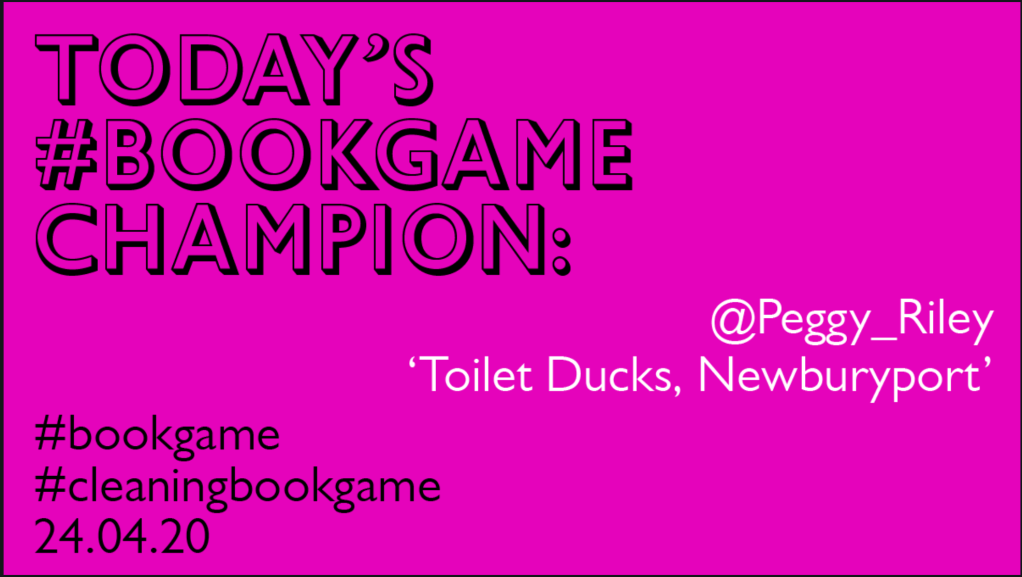
Boy, howdy, these are strange days. We used to dance every time we heard the word “unprecedented”, until our hips went out. But the wonderful Foyle’s Bookshop is trying to cheer us all up with their pun-tastic weekly Twitter book game. And today – I am the winner!

Want to play? Jump in next Friday – see you on Twitter!

The Best Most Awful Job

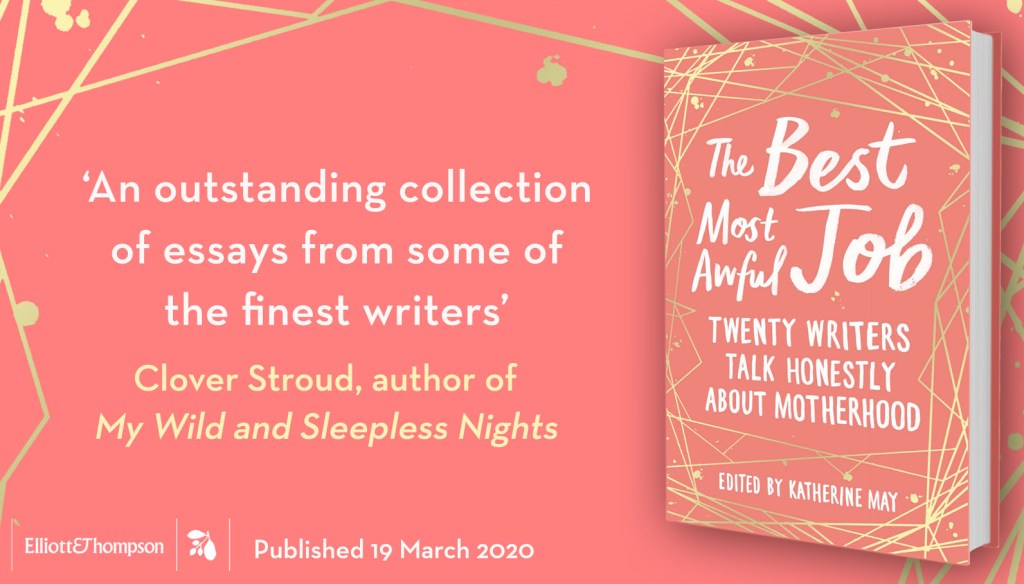
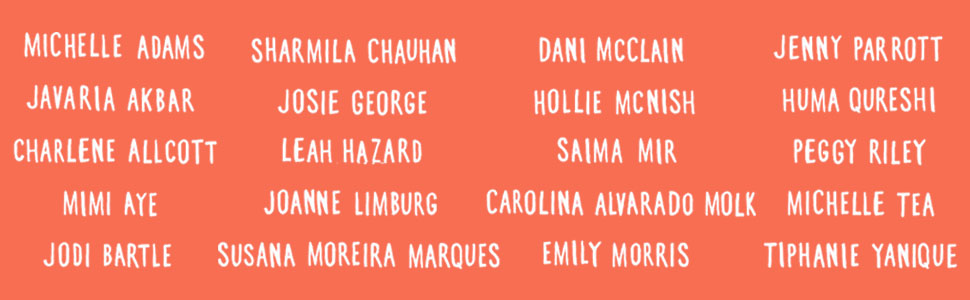
I’m delighted to be a part of this new anthology, published 19 March 2020. The Best Most Awful Job features 20 brand new essays, covering the whole spectrum of mothering, including – in my case – being mothered, being unbothered, and being unable to mother. My essay is pretty brutal, according to editor Katherine May, but it’s a new way of working for me – and I’m proud to be in such great company at Elliot & Thompson Books. Here’s a little press about the writers, and here’s a link to an online shop. Three cheers for new anthologies – hip hip!

Thread and Word

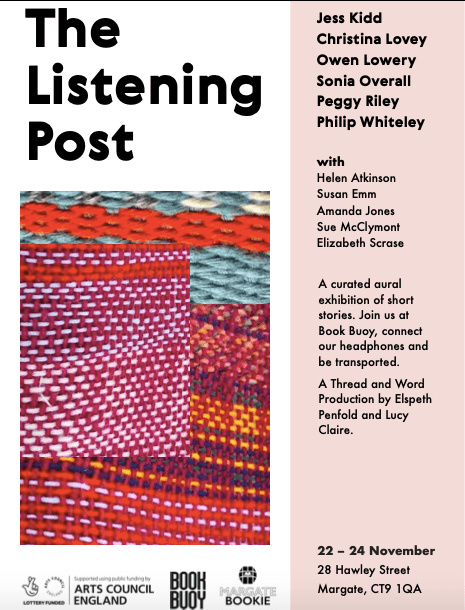
Here’s a link to the sound installation made by Thread and Word from my short story for them, called “Your Last”. Click to listen to me or any of the other lovely stories found there which were shared in Margate for The Listening Post at the Book Buoy. Many thanks to artists Elspeth Penfold and Sonia Overall: it’s always painful listening to yourself read anything, but they made it trouble free!

A Million Words

There seems to be no agreement on which author first said a writer had to write their “first million words” before they were really ready to write. Some attribute it to Ray Bradbury, while others cite Elmore Leonard namechecking John D. McDonald. I was certain it was Kurt Vonnegut, because he gives so much good advice. Whoever said it, I’m happy to reach my own million-word milestone. While I might not count them, draft after draft, I have proof of them in the form of morning pages: a million words, typed over my first cup of tea. Want your own badge? Join in at 750words.com. As for me, I’ll see you in the morning – doing pages!


Flash Fiction and where to send it

Recently, I ran a flash fiction workshop for WhitLit’s Write Mind, a new initiative linking the act of writing with wellbeing. For the workshop, we looked at dribbles and rabbles (50 word & 100 word stories – title not included) as well as their longer-worded cousins, as a way to get started with getting our work out into the world. (This is not to imply that flash fiction is somehow “easier” to write than longer pieces – far from it – but the form seems particularly suited to giving opportunities for new writers, as there are so many festivals and on-line sites that actively want submissions.) As I promised the workshop participants a round-up of upcoming deadlines for flash fiction – here it is!

My workshop took place during the Flash Fiction Festival, run by Bath Flash Fiction. Bath has upcoming deadlines for flash fiction (a 300 word limit, which is called a trabble) on 13 October 2019 and novellas-in-flash (a short novella, not more than 18K with each flash no more than 1K) on 12 January 2020. Of their work, Bath Flash Fiction Festival says: Our goal is promote flash fiction for both writers and readers and to bring the genre to a wider audience. Running a three-times-a-year rolling flash fiction award with substantial prizes and chance of publication gives writers a big incentive to create great flash. And our new novella-in-flash award provides the opportunity to have a longer work released in a quality publication.
They also run Ad Hoc Fiction, which offers a weekly (and free) micro fiction competition as well as novellas-in-flash publications. Why not send them something? Follow the links to learn more about deadlines, guidelines & entry fees – a thorny issue for writers. (But publishers are aware that entry fees are not doable for many writers – many competitions have subsidised or free spots – and Reflex Fiction below offers a “choose your own fee” – surely, this is the way of the future!)

New Flash Fiction Review is the portal for the Anton Chekhov Price for Very Short Fiction, judged by Angela Readman. Submissions 800 words or fewer. There’s a 15 July deadline – be quick! 

Here’s a link to The MsLexia Flash Fiction Award: Submit your best trabbles (300 word stories) before 30 September 2019.  Sorry/not sorry this is women only. Placing 3rd in a MsLexia short story contest gave me a real boost, when I was starting out, and there will always be acreage in my heart for MsLexia.

Reflex Fiction runs the quarterly Reflex Flash Fiction Competition which lets writers “choose their own fee” for submissions – a great idea! Reflex is ALWAYS accepting submissions with a rolling series of deadlines for their contests – and they publish a story every day! Still trying to figure out what flash fiction “is”? Check out this Reflex page.

Best Micro-Fiction is an anthology, looking for work with fewer than 400 words.  Accepting submissions until 1 December 2019.  

The on-line flash-fiction magazine SmokeLong Quarterly publishes stories weekly & quarterly.   They accept submissions for work under 1000 words for publication – as well as for the prestigious Smokelong Quarterly Award – be sure to check early 2020 for details about that. Smokelong is a terrific resource of stories, demonstrating what flash fiction is & can do, as well as interviews with writers.   

Can you write a story in fewer than 40 words using the prompt “milk moustache?”  Then the One Sentence Story Contest is for you! Enter by 8 September.  

Paragraph Planet publishes 75 word stories – on-line, every day!   
Every Day Fiction:  features “bite sized stories for a busy world”, taking submissions under 1000 words.

National Flash Fiction Day may be over, but NFFD are already planning for 2020. There’s plenty of time to write your dribbles and drabbles – and submit!